
In addition to soil hardness data, boring produces:
- Boring log: a description of the soil layers at each depth, complete with soil type, color, and consistency
- Soil samples: disturbed samples and, where required, undisturbed samples for testing in the soil mechanics laboratory
- Groundwater level information, which is essential for foundation and excavation planning
This survey is highly recommended for multi-story buildings, factories, large warehouses, bridges, towers, and projects with heavy loads or complex soil conditions.
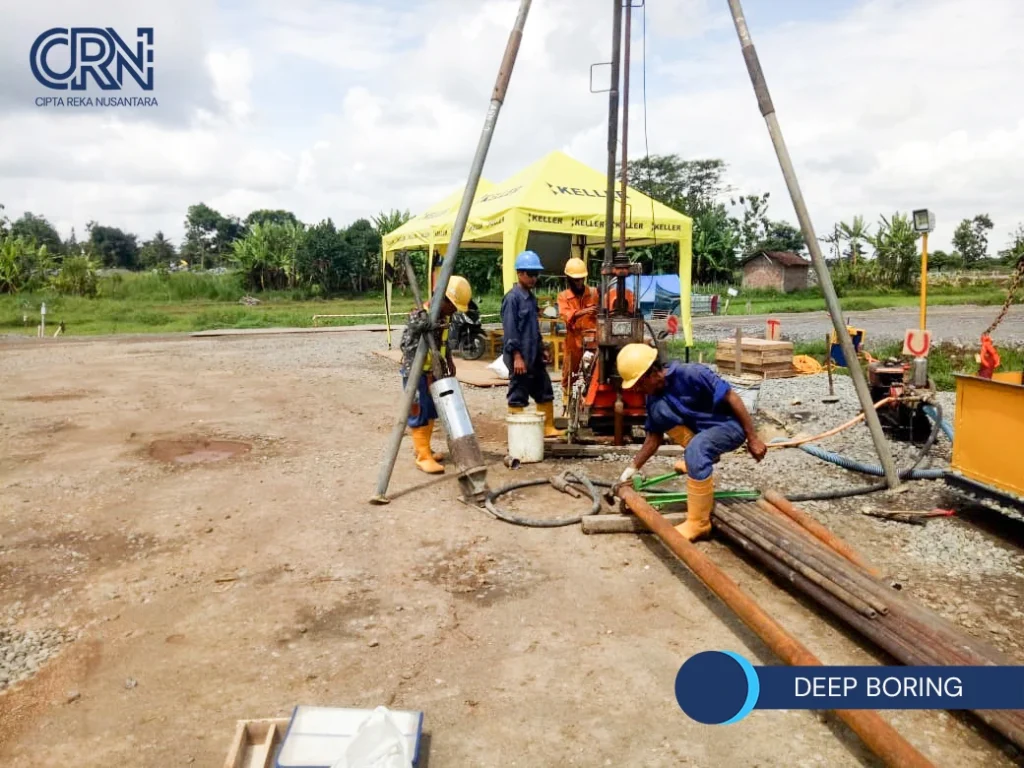
Scope of Work & Work Stages
- Site Survey & Borehole Location PlanningBorehole locations and drilling depths are determined based on the building type, design loads, and site conditions, in coordination with the designers.
- Equipment & Team MobilizationThe drilling rig and field team are brought to the site and set up at each borehole location.
- Drilling ExecutionDrilling is carried out in stages while recording changes in the soil layers, and the groundwater level is observed.
- SPT TestingAt specified depth intervals, drilling is paused to perform the SPT and obtain N-SPT values.
- Soil SamplingSoil samples are taken, labeled, and properly packed for delivery to the laboratory.
- Laboratory TestingSamples are tested in the soil mechanics laboratory to determine the physical and mechanical properties of the soil (e.g., water content, unit weight, Atterberg limits, and shear strength).
- Analysis & ReportingField and laboratory data are analyzed to establish the soil layer profile, soil parameters, bearing capacity, and foundation recommendations in the report.
What You Get
- Complete boring log for each point
- N-SPT values against depth
- Soil layer profile and stratification
- Groundwater level data
- Laboratory test results for soil samples
- Soil parameters for foundation analysis and design
- Foundation bearing capacity calculations and recommendations on foundation type and depth
- Borehole location plan and photo documentation of the work
- A complete soil investigation report