
This test yields two main data sets at each depth:
- Cone resistance (qc): indicates how hard or dense the soil layer is
- Sleeve friction (fs) and total sleeve friction: indicates the friction between the soil and the instrument sleeve, which is useful for determining soil type and calculating pile foundation bearing capacity
CPT is particularly suitable for soft to medium soils, such as clay and fine sand. The results help determine the depth of hard soil, the appropriate foundation type (shallow foundation, driven piles, or bored piles), and the allowable bearing capacity of the soil.
The advantages of CPT are that it is relatively fast to perform, provides continuous results with depth, and is cost-effective. For projects with complex soil conditions or heavy building loads, CPT is generally combined with boring to obtain a more complete picture of the soil.
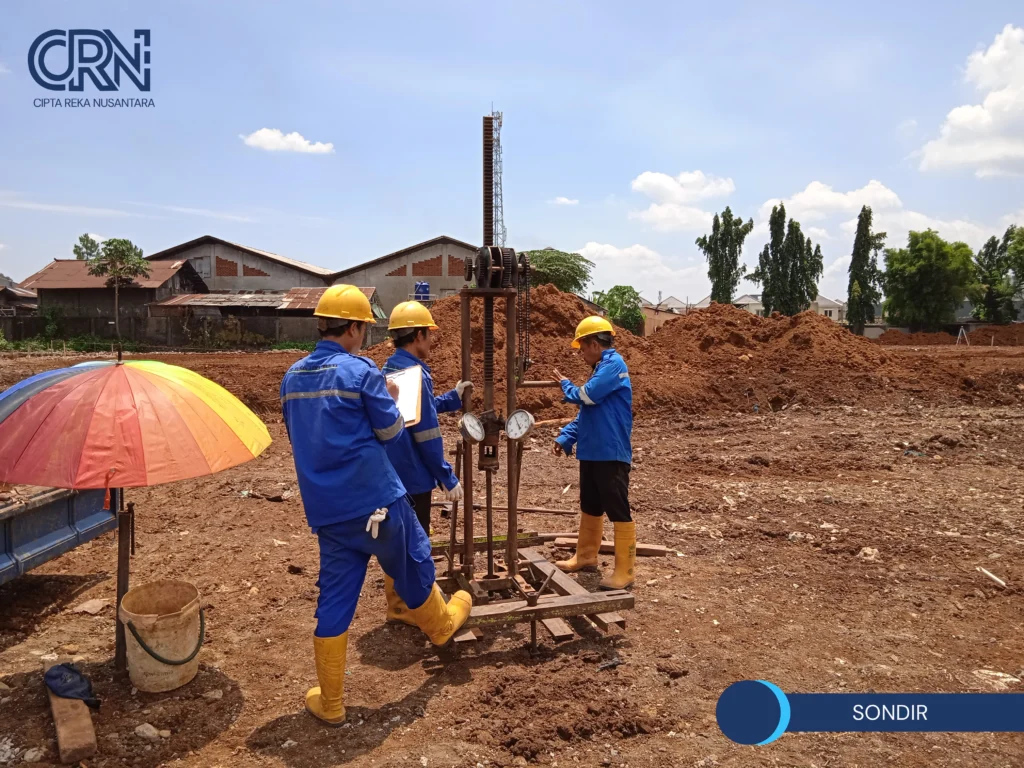
Scope of Work & Work Stages
- Site Survey & Point DeterminationThe team reviews the project site, equipment access, and ground conditions, then determines the number and location of CPT points together with you and the designer, based on the site area and building type.
- Mobilization & Equipment SetupThe CPT rig and operators are brought to the site and the rig is set up at the test point with anchors to keep it stable during pushing.
- TestingThe cone is pushed into the ground gradually, and cone resistance and sleeve friction readings are recorded at specified depth intervals.
- Test TerminationTesting continues until a hard soil layer or the equipment's capacity limit is reached, in accordance with applicable provisions.
- Data ProcessingField data is processed into graphs of cone resistance, local friction, and total friction against depth.
- Interpretation & AnalysisGeotechnical engineers interpret the soil layer profile and calculate soil bearing capacity for various foundation alternatives.
- ReportingAll data, analysis, and recommendations are compiled in a soil investigation report.
What You Get
- CPT (sondir) results at each test point
- Graphs of cone resistance (qc) and local friction against depth
- Soil layer profile and stratification
- Depth of the hard soil layer
- Soil and foundation bearing capacity calculations
- Recommendations for foundation type and depth
- Test point location plan and photo documentation of the work
- A complete soil investigation report