
A building may look fine from the outside even though its structural capacity has declined. A structural audit is a technical inspection to confirm one thing: whether the building is still fit and safe for use, or needs to be repaired and strengthened. This article explains when a structural audit is needed, how the process works, and what you get from it.
What is a building structural audit?
A structural audit is the inspection and evaluation of the condition of a building's structural elements, such as foundations, columns, beams, slabs, and roof frames, to assess their fitness and safety. Unlike an ordinary visual inspection, a structural audit combines field observation, material testing, and engineering calculations, so its conclusions are measurable rather than mere estimates.
Why is a structural audit important?
A building's structure carries loads every day, and its capacity can change over time. Some common causes:
- Building age. Concrete can undergo carbonation and its reinforcement can rust, while steel can corrode.
- Changes in use or load. A warehouse fitted with multi-level racking, a room equipped with machinery, or an added floor increases loads beyond the original design.
- Special events. Earthquakes, fires, floods, or impacts can weaken a structure without obvious signs.
- Original construction quality. Concrete quality or reinforcement that does not match the drawings may only come to light years later.
- Legal requirements. A structural audit can form part of the supporting data for the technical assessment required to obtain an SLF, as well as for insurance requirements or internal company audits.
Knowing the actual condition early gives you more remediation options at a more manageable cost.
Signs a building needs an audit
- Cracks that are wide, continuous, or appear in columns, beams, and joints between structural elements (hairline cracks in plaster are generally not a cause for concern)
- Sagging floors or beams, or uneven floors
- Spalling concrete with exposed, rusted reinforcement
- A building or part of a building that is tilting or settling
- Excessive vibration when machinery or vehicles are operating
- Plans to change the building's use, add floors, or install heavy equipment
- Older buildings without as-built drawings or maintenance records
If you notice one or more of the signs above, consult a structural engineer. Don't wait for the damage to get worse.
Which buildings need an audit?

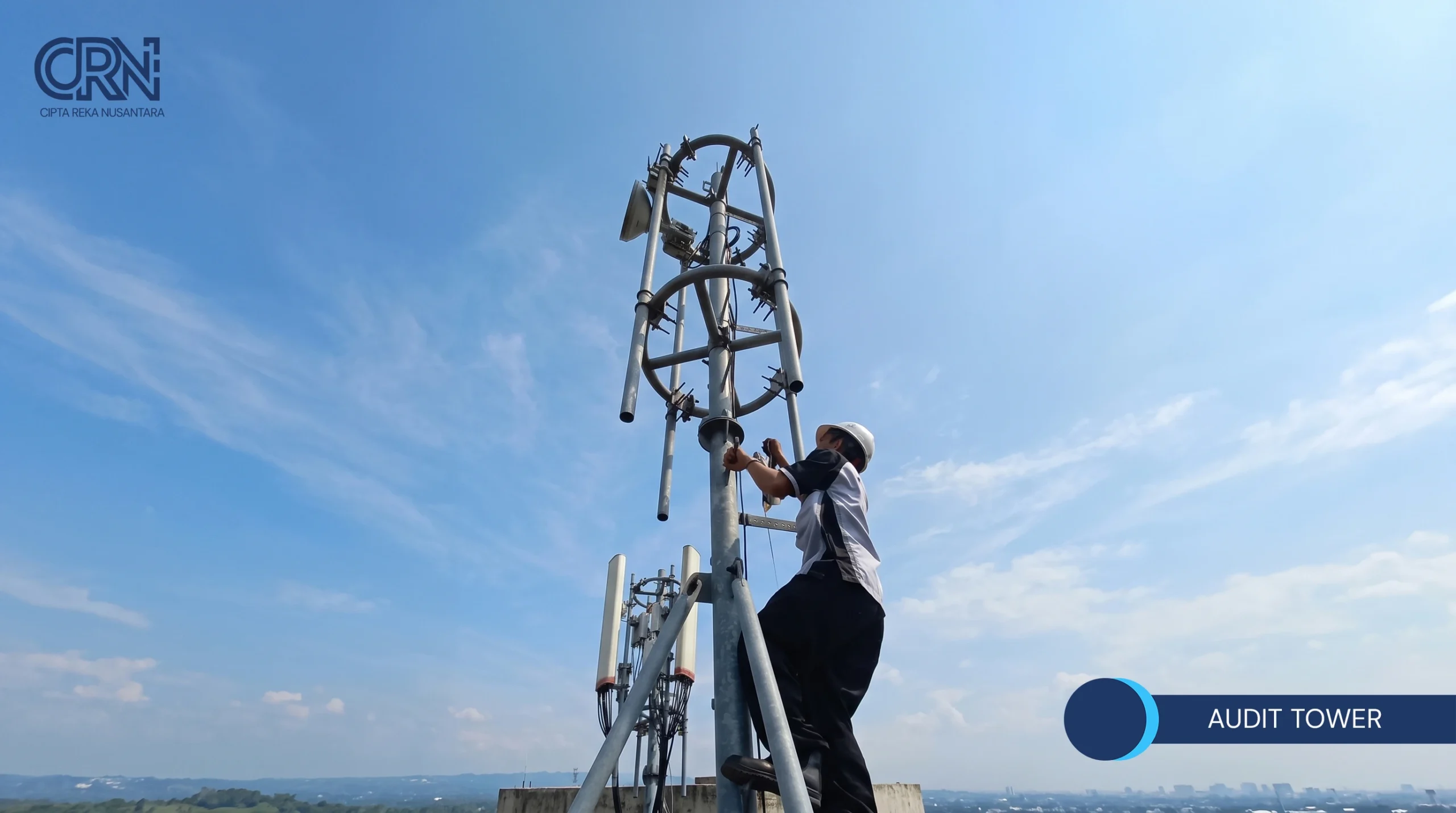
Structural audits are relevant for factories and warehouses that carry heavy loads and machine vibration, office buildings, shophouses, hotels, schools, and other public buildings. For telecommunication towers, the process is similar and is followed by strengthening design where necessary.
Structural audit stages
In general, a structural audit is carried out through the following stages:
- Data collection. Engineers review the design or as-built drawings, building history, and operational loads. If drawings are not available, the structural elements are measured and redrawn.
- Visual inspection. Damage such as cracks, corrosion, deflection, and deformation is mapped and documented.
- Field testing. As needed, non-destructive tests (NDT) such as Rebar Scan, Hammer Test, and UPV Test are carried out, along with concrete sampling by coring for compressive strength testing. For steel structures, dimensional measurements and hardness tests are performed.
- Structural modeling and analysis. Field data is entered into a three-dimensional model using software such as ETABS and SAP2000, then analyzed for gravity, wind, and seismic loads in accordance with applicable Indonesian standards.
- Capacity evaluation. The capacity of each element is compared with the acting forces to determine which elements are safe and which are problematic.
- Conclusions and report. The results are presented in a report containing the data, analysis, feasibility conclusions, and recommendations.
What are the outcomes of a structural audit?
Audit conclusions generally fall into one of three categories:
- Fit and safe for use, possibly with recommendations for periodic monitoring
- Fit with repairs, for example crack repair, corrosion treatment, or load restrictions
- Structural strengthening required, along with alternative strengthening methods
A good report clearly states the basis of its assessment, so you can understand the reasoning behind each conclusion.
How to evaluate a structural audit service provider
A structural audit concerns safety, so choose your provider carefully. A few questions worth asking:
- Who is the engineer in charge, and what are their background and qualifications?
- Is testing carried out with well-maintained equipment and clear procedures?
- Does the analysis follow applicable standards, such as SNI 1726 (seismic resistance), SNI 1727 (design loads), SNI 2847 (structural concrete), and SNI 1729 (structural steel)?
- Is the report complete, well documented, and does it contain actionable recommendations?
Frequently asked questions
- Does a structural audit damage the building? Most tests are non-destructive. Concrete sampling by coring causes only minor damage, and the holes are patched once the work is complete.
- How long does a structural audit take? It depends on the building's size, complexity, and number of test points. A realistic timeline can be confirmed once an engineer has reviewed the conditions and scope of work.
- Do all buildings need to be audited periodically? Audits are usually carried out when there are signs of damage, a change in function or load, a special event, or a legal requirement. The frequency of periodic inspections can be recommended by an engineer based on the building's type and condition.
- Can a structural audit be followed by strengthening? Yes. If the audit shows insufficient capacity, the engineer can design strengthening based on the same analysis.
Consult us about your building's condition
PT Cipta Reka Nusantara provides factory and warehouse structural audits as well as tower strengthening, with field testing and analysis by engineers. Contact us via WhatsApp for an initial consultation.